
Category: XBRL Tagging

SEC EDGAR Release 26.0.1: Key Updates, Form N-CR Changes, and What Filers Need to Know
On February 2, 2026, the U.S. Securities and Exchange Commission implemented EDGAR Release 26.0.1, introducing targeted updates across the EDGAR Filing Website, Online Forms Management Website, Filer Management Website, and related APIs. While this SEC EDGAR update is not a major system overhaul, it includes important refinements to submission notifications and changes to certain filing […]
| 04/14/2026

iXBRL Fee Exhibit Tagging Requirements on Registrations
If your SEC submission includes filing fees, your process just gained a new, non‑negotiable step. Beginning July 31, 2025, the Inline XBRL fee tagging exhibit, EX‑FILING FEES, is required for all filers, including operating companies with fee‑bearing registrations and certain investment companies using Forms N‑2 and N‑14. It’s part of the SEC’s push to make […]
| 12/12/2025
XBRL to iXBRL: What Every SEC Filer Needs to Know in 2025
The landscape of financial reporting is undergoing a fundamental transformation. With the U.S. Securities and Exchange Commission (SEC) mandating the use of Inline XBRL (iXBRL) for most filings, businesses must transition from traditional XBRL filing practices or risk falling out of compliance. This shift is more than a formatting tweak — it’s a structural change […]
| 07/23/2025

How to Enroll in EDGAR Next for Existing SEC Filers
Now is the time to enroll in EDGAR Next! The SEC’s new EDGAR platform, EDGAR Next is now live. All current/existing SEC filers must enroll in the new system prior to September 12, 2025. If you don’t enroll during the enrollment window, you will need to reapply for EDGAR access with a signed and notarized […]
| 06/06/2025

The Ultimate Guide to Comprehensive SEC Filings
Public companies must regularly file SEC reports, which are mandatory disclosures they file with the Securities and Exchange Commission (SEC). These reports clearly show how the company is doing financially and what’s going on in its operations. Investors need to get this info so they can make smart choices about where to put their money. […]
| 04/28/2025

Typical SEC Filings That SPACs Need To Do
Complying with the Securities and Exchange Commission (SEC) filing requirements is essential to launching and operating a Special Purpose Acquisition Company (SPAC). A SPAC raises money through an initial public offering (IPO) to merge with or acquire a private company, which then becomes publicly traded. Along this journey, the SPAC must file various SEC forms […]
| 02/21/2025

Understanding iXBRL Filings
Inline XBRL (iXBRL) is an updated SEC rule to the existing eXtensible Business Reporting Language (XBRL) SEC filing requirement that allows easier machine and human readability of public company’s financial data. What are iXBRL Filings? iXBRL filings involve integrating eXtensible Business Reporting Language (XBRL) tags directly into HTML documents. This allows one document to serve […]
| 12/17/2024

How to Embed SEC EDGAR Filings to Website
Embedding XBRL filings on your website is critical for transparency and compliance with SEC requirements. While this can be done manually, businesses can now streamline this process using automated tools. The right tool will make sure that SEC filings, including XBRL data, are accurately posted and easily accessible for investors and stakeholders. What are the […]
| 11/26/2024

When XBRL Is Required in an S-1 Filing
S-1 filings are a critical component of the initial public offering (IPO) process, as they provide detailed financial and operational disclosures to potential investors. XBRL (eXtensible Business Reporting Language) is crucial for complying with all SEC regulations, making it a key component of numerous SEC filings. While not all S-1 filings require XBRL, certain conditions […]
| 11/26/2024

What Are the Requirements for Filing in iXBRL Formats?
In today’s dynamic financial landscape, ensuring transparency and accessibility of financial data is paramount. Recognizing this need, the U.S. Securities and Exchange Commission (SEC) has introduced a pivotal change: mandating the use of Inline XBRL (iXBRL) for financial filings. This shift is designed to improve the clarity, efficiency, and utility of financial data, benefiting stakeholders […]
| 11/22/2024

When is iXBRL Filing Required for companies?
In the evolving landscape of financial reporting, the U.S. Securities and Exchange Commission (SEC) has taken significant steps to enhance the transparency and accessibility of financial data through the implementation of Inline XBRL (iXBRL) filing requirements. iXBRL seamlessly integrates the readability of HTML with the data-rich capabilities of XBRL, creating a single, dynamic document that […]
| 11/22/2024
How to Do an XBRL Filing to the SEC?
The U.S. Securities and Exchange Commission (SEC) requires public companies to submit financial statements in eXtensible Business Reporting Language (XBRL) format. This standard facilitates the analysis of financial data by making it more accessible and structured. Companies must comply with these requirements to ensure that their financial filings are properly formatted, accurate, and easy for […]
| 10/04/2024
Is XBRL Filing Mandatory Worldwide?
In the evolving landscape of financial reporting, XBRL has emerged as a significant player in standardizing data presentation for enhanced transparency and accessibility. The question of whether XBRL filing is mandatory has garnered considerable attention among businesses, regulatory authorities, and financial analysts. In this article, we will explore the current mandates regarding XBRL filing across […]
| 10/04/2024
XBRL: Revolutionizing Financial Data Exchange and Business Reporting
XBRL, or eXtensible Business Reporting Language, has revolutionized financial transactions worldwide. It began as a niche technology in the late 1990s, first introduced by the American Institute of Certified Public Accountants (AICPA) after using XML (eXtensible Markup Language) to automate financial reporting. He recognized its potential to standardize and streamline the exchange of financial information […]
| 09/13/2024
What is an XBRL Tag and How Do They Work in SEC EDGAR Filings?
In the age of digital accounting, Extensible Business Reporting Language (XBRL) is revolutionizing how we understand and utilize financial information. At its core are XBRL tags – labels affixed to individual data elements that enable them to be processed and analyzed electronically. XBRL provides a standardized language for businesses to communicate their finances in a way that […]
| 08/08/2023

The SEC Increases The Scope Of Inline XBRL Requirements
On March 20, 2019, the Securities and Exchange Commission (SEC) published final rule amendments to the FAST Act, increasing the requirements and scope of the SEC’s new version of Inline XBRL (iXBRL) starting in July of 2019. Although there are many benefits in the amendments including measures for reduced disclosure, the additional iXBRL requirements will […]
| 05/17/2019
Benefits of XBRL Reporting to the SEC
XBRL is an electronic language for financial reporting that is freely licensable, and based on XML framework. It acts as the standard in the financial circles for preparing, publishing in various formats, extracting and automatically exchanging financial statements of publicly-held companies and the information contained in them. XBRL filing requirements enhance the usability of the […]
| 10/18/2017
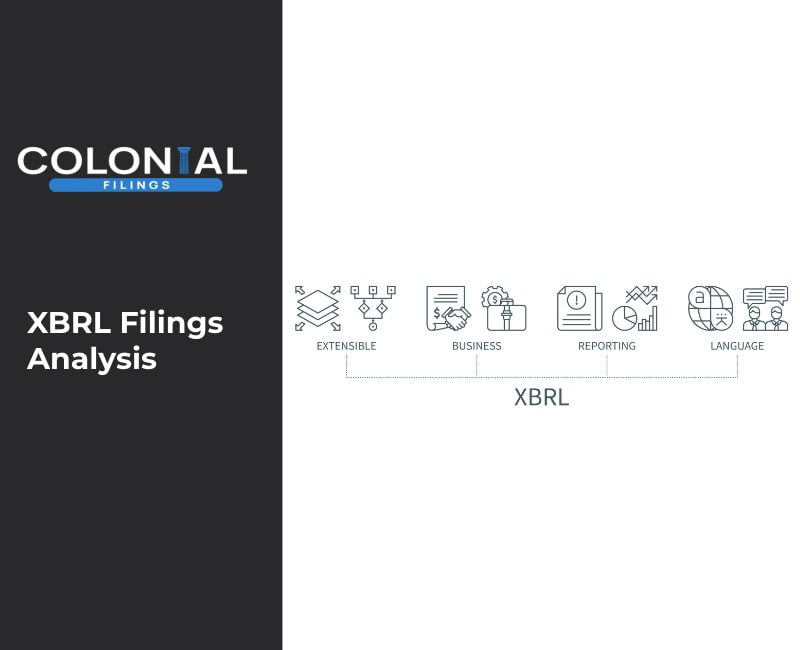
Detailed Analysis of XBRL Filings
Recently, we performed a side by side comparison and analysis of recently filed XBRL filings by our competitors. As shown in the analysis, there could be many tags that are either unnecessary or incorrect. These types of errors can hurt public companies that are earnestly trying to maintain proper data quality. Moreover, investors, analysts, auditors, and creditors may be skeptical about […]
| 06/01/2014