
Blog

What Documents Are Required for a Reg D Offering?
Raising capital is a pivotal challenge for startups and emerging companies. While an Initial Public Offering (IPO) is a traditional means of securing funds, it often proves too costly and complex for newer businesses. Enter Regulation D (Reg D) offerings, which provide a viable alternative by allowing companies to raise capital through private placements while […]
| 11/22/2024

How to Retrieve a Reg D Filing
Navigating the labyrinth of securities regulation can be daunting, especially for those unfamiliar with its nuances. One crucial element in this domain is the Regulation D (Reg D) filing, particularly the Form D notice. Companies involved in private securities placements file this document to disclose essential details about their offerings. Whether you’re an investor, compliance […]
| 11/22/2024

How to Revise a Reg D Filing with the SEC
Revising a Regulation D filing with the Securities and Exchange Commission (SEC) maintains compliance with securities regulations and ensures the integrity of a private placement. Changes in the offering details, corrections of prior errors, or regulatory updates often necessitate such revisions. Effective amendments safeguard against potential legal issues and position the business for continued success. […]
| 11/07/2024
Is Reg D Filing Required for Friends and Family?
When raising capital from friends and family, businesses should know whether a Regulation D (Reg D) filing is required. This impacts the fundraising process’s legal and financial elements. Businesses should explore the specifics of Reg D filings, with a special focus on situations involving personal networks. That way, businesses can prepare themselves accordingly when handling […]
| 11/07/2024
When Is Reg D Filing Required?
Regulation D (Reg D) is a set of SEC rules that provide exemptions from the more onerous registration requirements imposed on public offerings. This allows companies, especially startups and small businesses, to access funding faster and with less financial disclosure. Working through Reg D’s provisions helps companies align their fundraising activities with legal standards, ensuring […]
| 11/07/2024

SEC Makes Changes to EDGAR System: Security, Filer Access, Account Management
The U.S. Securities and Exchange Commission (SEC) recently announced significant updates to the Electronic Data Gathering, Analysis, and Retrieval (EDGAR) system. These changes are designed to enhance the system’s security and improve filers’ access to and management of their accounts. What Businesses Need To Know About EDGAR System Enhancements The latest enhancements to the EDGAR […]
| 10/22/2024

What is Form D?
SEC Regulation D (Reg D) utilizes the Form D for companies conducting private offerings in the United States. Primarily utilized in the United States, this form is crucial for companies seeking to raise capital without going through the lengthy and often arduous process of registering their securities with the Securities and Exchange Commission (SEC) and […]
| 10/04/2024
How to Do an XBRL Filing to the SEC?
The U.S. Securities and Exchange Commission (SEC) requires public companies to submit financial statements in eXtensible Business Reporting Language (XBRL) format. This standard facilitates the analysis of financial data by making it more accessible and structured. Companies must comply with these requirements to ensure that their financial filings are properly formatted, accurate, and easy for […]
| 10/04/2024
Is XBRL Filing Mandatory Worldwide?
In the evolving landscape of financial reporting, XBRL has emerged as a significant player in standardizing data presentation for enhanced transparency and accessibility. The question of whether XBRL filing is mandatory has garnered considerable attention among businesses, regulatory authorities, and financial analysts. In this article, we will explore the current mandates regarding XBRL filing across […]
| 10/04/2024
XBRL: Revolutionizing Financial Data Exchange and Business Reporting
XBRL, or eXtensible Business Reporting Language, has revolutionized financial transactions worldwide. It began as a niche technology in the late 1990s, first introduced by the American Institute of Certified Public Accountants (AICPA) after using XML (eXtensible Markup Language) to automate financial reporting. He recognized its potential to standardize and streamline the exchange of financial information […]
| 09/13/2024
SEC Approves New and Updated PCAOB Audit Standards and an Amendment to the PCAOB’s Contributory Liability Rule
The Securities and Exchange Commission (SEC) has recently green-lighted several critical updates proposed by the Public Company Accounting Oversight Board (PCAOB). These updates encompass new audit standards and significant amendments to the PCAOB’s contributory liability rule. Central to these changes is the introduction of AS 1000, which delineates the general responsibilities of auditors during financial […]
| 09/06/2024

SEC Proposes Joint Standards in Financial Transparency Act
The Securities and Exchange Commission (SEC) has recently proposed joint data reporting standards under the Financial Data Transparency Act of 2022. This initiative aims to harmonize the data reporting standards across various financial regulatory bodies (see which ones below). As financial ecosystems become increasingly complex, uniform data standards become essential to support effective oversight. These […]
| 08/20/2024
A Summary of the SEC’s Statement on Disclosure Review
The SEC’s Division of Corporation Finance recently shared insights at the 2024 SEC Speaks Conference, emphasizing its dedication to enhancing disclosure practices within the financial markets. The statement provided by Erik Gerding, the Division’s director, highlights its ongoing efforts to safeguard investor interests through rigorous review and oversight of corporate disclosures. With a focus on […]
| 07/11/2024
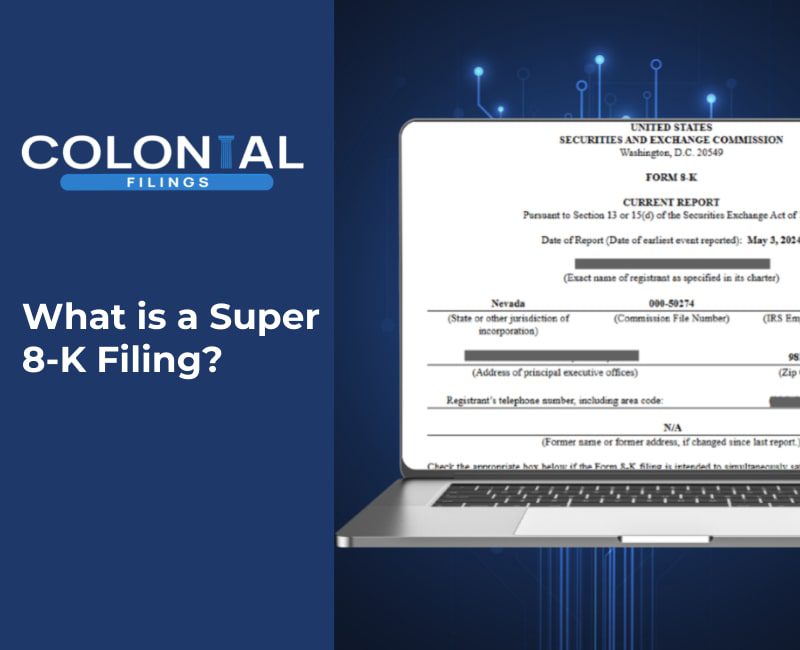
What is a Super 8-K Filing?
A Super 8-K filing is a specific type of report that public companies must file with the Securities and Exchange Commission (SEC) under certain conditions. It goes beyond the requirements of a standard 8-K by including additional details typically required in a Form 10 registration statement. This form is crucial when a company undergoes significant […]
| 05/31/2024

How Accountability of Public Companies Can Benefit Management’s Performance
Corporate accountability is a cornerstone of sustainable business practices that can enhance management’s performance. Companies comply with regulatory demands and gain competitive advantages by adopting transparent and ethical practices. This shift towards greater accountability helps firms manage risks better and align their operations with broader social values, improving stakeholder relationships and long-term success. What do […]
| 05/12/2024
SEC Implements Regulations to Standardize Climate-Related Information for Investors
The U.S. Securities and Exchange Commission (SEC) has adopted new regulations to standardize climate-related disclosures for investors. This initiative comes amidst increased demand for transparency regarding the financial implications of climate-related risks on public companies. By enhancing and standardizing the disclosure requirements, the SEC is trying to provide investors with more consistent, comparable, and actionable […]
| 04/14/2024
SEC Enhances Private Fund Reporting with Newly Adopted Amendments to Form PF
In a significant move towards bolstering transparency and risk management within the financial sector, the Securities and Exchange Commission (SEC) has announced the adoption of amendments to Form PF. This confidential reporting form targets certain SEC-registered investment advisers to private funds, including those dual-registered with the Commodity Futures Trading Commission (CFTC) as commodity pool operators […]
| 03/18/2024

Navigating the New SEC Amendments: Schedule 13G/D Filing Deadlines
The SEC finalized amendments to the Schedule 13G/D filing deadlines signify a pivotal shift in securities reporting and compliance requirements. These changes aim to enhance transparency and efficiency in the disclosure of equity ownership. The main changes involve the accelerated filing deadlines and expanded disclosure requirements. Introduction to the SEC’s Latest Rule Changes To Schedule […]
| 02/09/2024

Understanding the Implications of the SEC’s Proposed EDGAR Next Amendments
The Securities and Exchange Commission (SEC) has proposed significant changes to the Electronic Data Gathering, Analysis, and Retrieval (EDGAR) system, known as EDGAR Next. These amendments aim to enhance security and streamline the filing process for users. However, they also bring forth new challenges and potential costs for filers. What are the implications that filers […]
| 12/06/2023

How Long After a Form S-1 Does It Take a Company to IPO?
When a company decides to go public, the Form S-1 is the initial registration form they file with the U.S. Securities and Exchange Commission (SEC). It contains detailed information about the company’s business operations, financial condition, and plans for the raised capital. The timeline from filing Form S-1 to an Initial Public Offering (IPO) can […]
| 11/15/2023

What Is the Difference Between an SEC Form S-1 and S-3?
When companies decide to raise capital through the sale of securities, they must register the securities with the U.S. Securities and Exchange Commission (SEC). Two common forms used for this registration process are Form S-1 and Form S-3. SEC Form S-1 and Form S-3 have some notable differences. They matter because they affect how quickly […]
| 11/15/2023

SEC Proposes Improvements to EDGAR Filer Account and EDGAR Next
The Securities and Exchange Commission (SEC) has recently proposed improvements to the Electronic Data Gathering, Analysis, and Retrieval (EDGAR) system, specifically focusing on filer access and account management. These proposed enhancements aim to streamline the filing process, enhance usability, and improve security measures. In this article, we will explore the key aspects of these proposed […]
| 10/25/2023

SEC Announces First Fee Rate Advisory for Fiscal Year 2024
The Securities and Exchange Commission (SEC) has recently released an important update regarding the fee rates for the fiscal year 2024, providing valuable information to market participants and investors. As a leading regulatory body in the securities industry, the SEC plays a crucial role in collecting fees from various market participants to fund its operations. […]
| 09/18/2023

What Private Offering Types Are Available?
Private offerings provide businesses with an opportunity to gather funding without going public. This enables them to maintain more control over their operations while still accessing crucial resources. As these offerings come with specific regulations and forms, it’s essential to know which one aligns best with a company’s goals and resources. Reg D Offering Regulation […]
| 08/28/2023