
Category: SEC
XBRL: Revolutionizing Financial Data Exchange and Business Reporting
XBRL, or eXtensible Business Reporting Language, has revolutionized financial transactions worldwide. It began as a niche technology in the late 1990s, first introduced by the American Institute of Certified Public Accountants (AICPA) after using XML (eXtensible Markup Language) to automate financial reporting. He recognized its potential to standardize and streamline the exchange of financial information […]
| 09/13/2024
SEC Approves New and Updated PCAOB Audit Standards and an Amendment to the PCAOB’s Contributory Liability Rule
The Securities and Exchange Commission (SEC) has recently green-lighted several critical updates proposed by the Public Company Accounting Oversight Board (PCAOB). These updates encompass new audit standards and significant amendments to the PCAOB’s contributory liability rule. Central to these changes is the introduction of AS 1000, which delineates the general responsibilities of auditors during financial […]
| 09/06/2024

SEC Proposes Joint Standards in Financial Transparency Act
The Securities and Exchange Commission (SEC) has recently proposed joint data reporting standards under the Financial Data Transparency Act of 2022. This initiative aims to harmonize the data reporting standards across various financial regulatory bodies (see which ones below). As financial ecosystems become increasingly complex, uniform data standards become essential to support effective oversight. These […]
| 08/20/2024
A Summary of the SEC’s Statement on Disclosure Review
The SEC’s Division of Corporation Finance recently shared insights at the 2024 SEC Speaks Conference, emphasizing its dedication to enhancing disclosure practices within the financial markets. The statement provided by Erik Gerding, the Division’s director, highlights its ongoing efforts to safeguard investor interests through rigorous review and oversight of corporate disclosures. With a focus on […]
| 07/11/2024
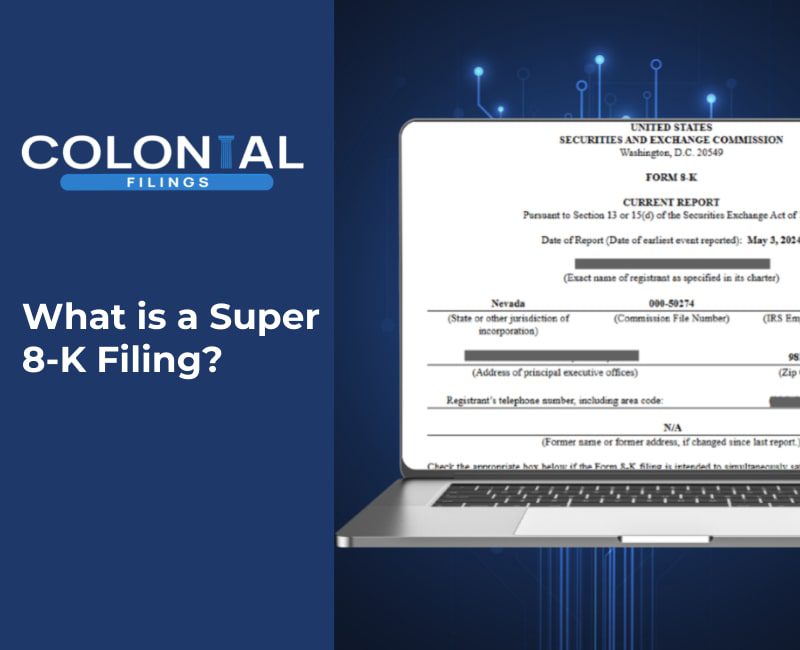
What is a Super 8-K Filing?
A Super 8-K filing is a specific type of report that public companies must file with the Securities and Exchange Commission (SEC) under certain conditions. It goes beyond the requirements of a standard 8-K by including additional details typically required in a Form 10 registration statement. This form is crucial when a company undergoes significant […]
| 05/31/2024

Understanding the Implications of the SEC’s Proposed EDGAR Next Amendments
The Securities and Exchange Commission (SEC) has proposed significant changes to the Electronic Data Gathering, Analysis, and Retrieval (EDGAR) system, known as EDGAR Next. These amendments aim to enhance security and streamline the filing process for users. However, they also bring forth new challenges and potential costs for filers. What are the implications that filers […]
| 12/06/2023

How Long After a Form S-1 Does It Take a Company to IPO?
When a company decides to go public, the Form S-1 is the initial registration form they file with the U.S. Securities and Exchange Commission (SEC). It contains detailed information about the company’s business operations, financial condition, and plans for the raised capital. The timeline from filing Form S-1 to an Initial Public Offering (IPO) can […]
| 11/15/2023

SEC Proposes Improvements to EDGAR Filer Account and EDGAR Next
The Securities and Exchange Commission (SEC) has recently proposed improvements to the Electronic Data Gathering, Analysis, and Retrieval (EDGAR) system, specifically focusing on filer access and account management. These proposed enhancements aim to streamline the filing process, enhance usability, and improve security measures. In this article, we will explore the key aspects of these proposed […]
| 10/25/2023
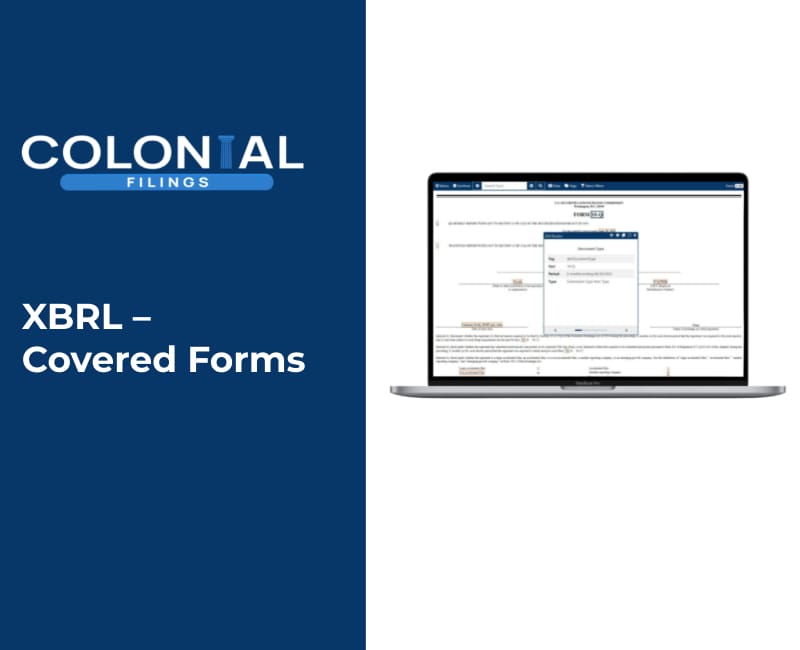
XBRL – Covered Forms
The world of financial data reporting and analysis is undergoing a revolutionary change, thanks to the arrival of Inline XBRL, or iXBRL. This standardized language for electronic communication of business and financial data is reshaping how companies, governments, and other organizations record, store, and transmit their financial information. Companies listed on stock exchanges throughout the […]
| 06/26/2023
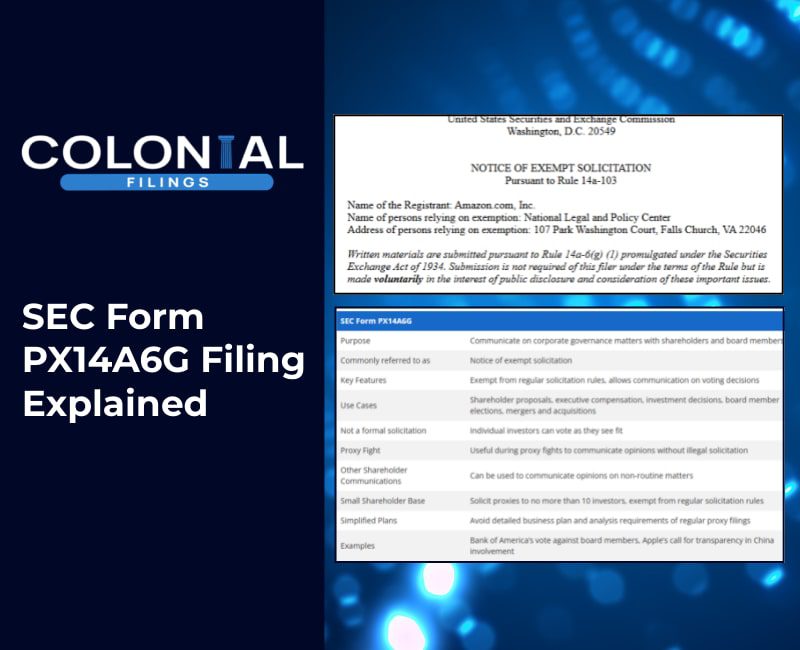
What is SEC Form PX14A6G and why do you need to file?
As an investor or business owner, it’s important to do your due diligence and understand what documents you need to file with the Securities and Exchange Commission (SEC). One such document is SEC Form PX14A6G. This form is used to communicate with other shareholders and board members about matters related to corporate governance. The purpose […]
| 05/17/2023

The SEC Adopts JOBS Act Inflation Adjustments
Recently, the Securities and Exchange Commission announced they had adopted amendments to some of its rules to implement inflation adjustments. These adjustments are required in accordance with the Jumpstart Our Business Startups, or JOBS, Act. Under this law, the SEC is required to make specific inflation adjustments to rules under the JOBS Act at least […]
| 09/23/2022

What is the Form ID?
If you need to submit documents to the SEC, you must first file a Form ID Application, which is also the main application for your online EDGAR account. If you do not have a Form ID, you will have a difficult time submitting documents to the Securities and Exchange Commission. If you cannot find your Form […]
| 08/26/2022
Electronic Filing Now Required for Investment Advisers and Managers, Says SEC
There has been a lot of discussion recently about steps that the SEC can take to make life easier for investors and investment managers. Now, they have done exactly that. Certain documents will be required to be submitted or filed electronically. These amendments will impact specific groups, including investment advisers and institutional investment managers. The […]
| 07/08/2022
SEC Proposes Rule Amendments to Modernize Beneficial Ownership Reporting
One of the hot topics in the financial markets recently has been transparency. Right now, a lot of shareholders feel like they have been left in the dark, as it can be hard for them to figure out what to do with their securities and investments. Now, the Securities and Exchange Commission (SEC) has proposed changes […]
| 02/19/2022

Regulation A (Reg A+) Forms List and SEC Filing Deadlines
Understanding what is Reg A and Why it Matters Regulation A (also known as Reg A or Reg A+) is a key exemption from the SEC’s traditional registration requirements, designed to make capital-raising easier for small and mid-sized businesses. Enacted under the JOBS Act and updated in 2015, Reg A+ is divided into Tier 1 […]
| 10/25/2021
SEC Adopts Amendments to Modernize and Enhance MD&A and other Financial Disclosures
On Nov. 19, 2020, the SEC adopted amendments to specific financial disclosure requirements in Regulation S-K, proposed on Jan. 30, 2020. The commission has considered suggestions from the comment letters as well as the SEC Division of Corporation Finance. Overview: Eliminating Item 301 (Selected Financial Data): Registrants are not required to provide 5 years of […]
| 12/02/2020

SEC Adopts Amendments to Improve M&A Disclosures in SEC Filings
On May 21, 2020, the SEC adopted amendments to existing rules on the acquired and disposition of business disclosures required in SEC filings to help provide better financial information to investors, early access to capital, and a reduction of the complexity of the entire process. The amended regulations will allow investors to assess the significance […]
| 06/26/2020

SEC Adopts Amendments to the Filer Definition
On March 12, 2020, the SEC, in its press release, announced the adoption of amendments to the definition of accelerated filers and large accelerated filers. These changes are adopted in congruence with the views of the SEC and Congress to promote capital formation, preserve capital, and reduce unnecessary burdens for small issuers and provide investor […]
| 05/18/2020
SEC Proposes Amendments to Regulation S-K and Financial Disclosure Requirements
On January 30, 2020, the SEC proposed amendments to Modernize, Simplify, and Enhance some financial disclosure requirements in Regulation S-K. The focus is on eliminating duplicative disclosures and making changes to simplify compliance efforts for registrants. The new rule will add a new item 303(a) to state the principal objectives of MD&A, eliminate the tabular disclosure […]
| 02/26/2020

SEC Proposes New Rules to Further Regulate Funds’ Derivatives
The Securities Exchange Commission (SEC) recently proposed new rules that aim to create a more comprehensive approach to the regulation of funds’ use of derivatives (i.e. through business development companies and Registered Funds). The proposal is comprised of three components: new SEC Rule 18f-4 under the Investment Company Act of 1940 (“Act”); SEC Rule 15l-2 under […]
| 01/13/2020
SEC Confidential Treatment: How it Works
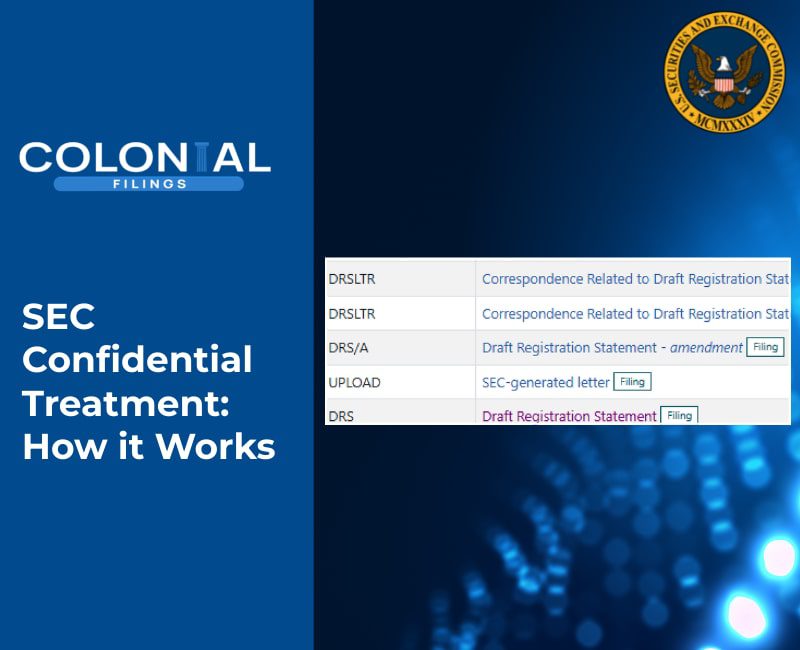
All companies have information they want to protect. Trade secrets, financial documents, and customer information to name a few. However, federal laws and regulations require companies to provide the SEC with certain information. Recently, changes have been made to relax the amount of confidential information companies must file. New amendments made to Regulation S-K now […]
| 09/09/2019
SEC Proposed Amendments for Accelerated and Large Accelerated Filer Definitions
The Securities and Exchange Commission (SEC) recently proposed amendments for the definitions of both an “accelerated filer” and “large accelerated filer” under the Securities Act Rule 405, Exchange Act Rule 12b-2, and Item 10(f) of Regulation S-K. Prior Smaller Reporting Company Definition Amendments Last year, the SEC amended the definition of a smaller reported company […]
| 06/04/2019

The SEC Increases The Scope Of Inline XBRL Requirements
On March 20, 2019, the Securities and Exchange Commission (SEC) published final rule amendments to the FAST Act, increasing the requirements and scope of the SEC’s new version of Inline XBRL (iXBRL) starting in July of 2019. Although there are many benefits in the amendments including measures for reduced disclosure, the additional iXBRL requirements will […]
| 05/17/2019

SEC to Update and Remove Unnecessary Disclosure Requirements
The Securities and Exchange Commission (SEC) voted in August to adopt amendments designed to simplify and update disclosure requirements. These amendments were aimed to get rid of disclosure requirements that appeared to be duplicative, overlapping, or outdated. These amendments are designed to ease regulatory burdens on issuers, while facilitating disclosure to investors. The amendments became effective […]
| 11/21/2018